
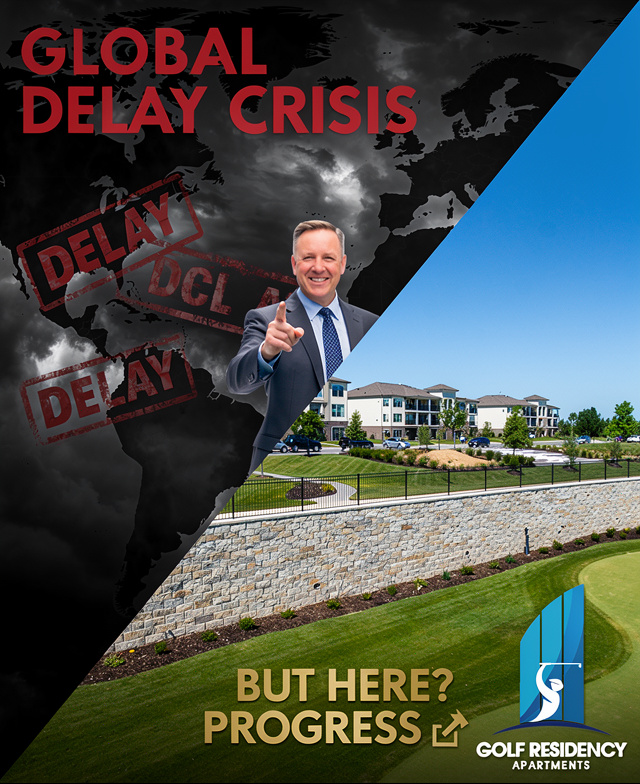
The Global Reality: You Are Not Alone
If you have invested in an apartment in Garden City, Bahria Town Phase 7, and watched the possession date come and go, you have likely asked yourself a painful question: How global construction delays comparison bahria town phase 7?
“Why is this happening to me? How here? Why now?”
The answer may surprise you.
Construction delays are not a uniquely Pakistani problem. They are not even a developing-world problem. They are a global epidemic affecting the world’s most advanced economies—the United States, the United Kingdom, and Canada.
According to the latest Crux Insight Report by HKA, a global consultancy specialising in risk mitigation, 2,002 projects across 107 countries with a total value of $2.254 trillion were analysed. The report revealed that projects globally experienced time overruns adding almost 16 months or two-thirds (66.5 per cent) to a typical schedule .
From Toronto to London, from New York to Vancouver, buyers are waiting longer, paying more, and growing just as frustrated as you.
This blog connects the dots between global construction trends and your specific situation in Garden Town, Bahria Town Phase 7. Not to make excuses. To educate, empower, and guide you toward realistic expectations and smarter investment decisions.
🌎 Part 1: The Global Delay Epidemic — What’s Happening Worldwide
🇨🇦 Canada: The 32-Month Approval Nightmare
The Problem: In Toronto, Canada’s largest city, the average time to get a construction project approved can stretch significantly due to multiple regulatory layers. As detailed in the 2026 Toronto building guide, all residential projects must comply with Zoning By-law 569-2013 and the Ontario Building Code (OBC). Even minor deviations—such as exceeding height limits or encroaching into setbacks—can trigger the need for a Committee of Adjustment application, adding several months to your timeline .
For home additions and renovations in Toronto, the complete process from initial planning to final occupancy typically takes 8 to 15 months, with the greatest time commitment occurring during the pre-construction phase rather than on the construction site itself .
The Lesson: Even in one of the world’s most stable, transparent real estate markets, bureaucracy moves slowly. Multiple agencies must sign off. Environmental assessments take seasons. Community consultations add months. Appeals add years.
Phase 7 Connection: Your project requires approvals from CDA, Rawalpindi Development Authority, Bahria Town internal bodies, IESCO, SNGPL, WASA, and more. Each is a potential bottleneck—just like in Canada.
🇬🇧 United Kingdom: The Contractor Insolvency Crisis
The Problem: The UK construction sector faces severe financial instability. According to the Office for National Statistics (ONS), 297 firms in the construction sector went under in November 2025 alone, comprising 158 specialist contractors, 123 building companies and 16 civil engineering firms. The construction industry recorded the highest number of insolvencies of any sector in the 12 months to November, with 3,950 failures .
Mark Supperstone, partner at accountancy firm S&W, noted: “Conditions across the UK construction sector remain challenging… Risk of failure is still a real threat for many businesses, particularly smaller and mid-sized firms operating with limited balance sheet headroom and restricted access to funding” .
The Allianz Trade Insolvency Report confirms that construction accounts for 18% of UK insolvencies, with tighter fiscal conditions placing further pressure on the sector .
The Lesson: Construction is a high-risk business even for established companies. The chain is only as strong as its weakest link.
Phase 7 Connection: Pakistan’s contractor ecosystem faces identical pressures. Material price volatility, payment delays, and skilled labor shortages create constant risk. Projects with strong financial backing and transparent payment practices are better positioned to retain quality contractors.
🇺🇸 United States: The Skilled Labor Shortage
The Problem: The U.S. construction industry faces a severe skilled labor shortage that is now reaching crisis proportions. According to Forbes, the U.S. construction industry needs nearly 500,000 new workers in 2026, yet more than 80% of firms report difficulty finding qualified talent, with craft openings (82%) and salaried roles (80%) considered harder to fill than a year ago .
With one in five workers over 55, the industry is facing a massive expertise drain. When firms look for new hires, 57% report candidates lack essential skills, certificates or licenses .
The National Association of Home Builders reports that builder confidence remained below the breakeven point of 50 every month in 2025, with two-thirds of builders offering incentives to move buyers. Construction payrolls decreased by 11,000 jobs in December, with economists blaming the reduced supply of workers on immigration policies .
The Lesson: Skilled labor is a finite global resource. When multiple projects launch simultaneously, they compete for the same qualified workers.
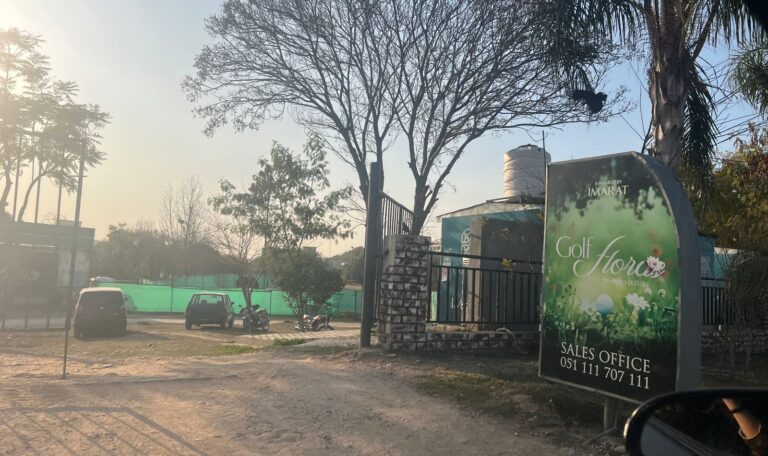
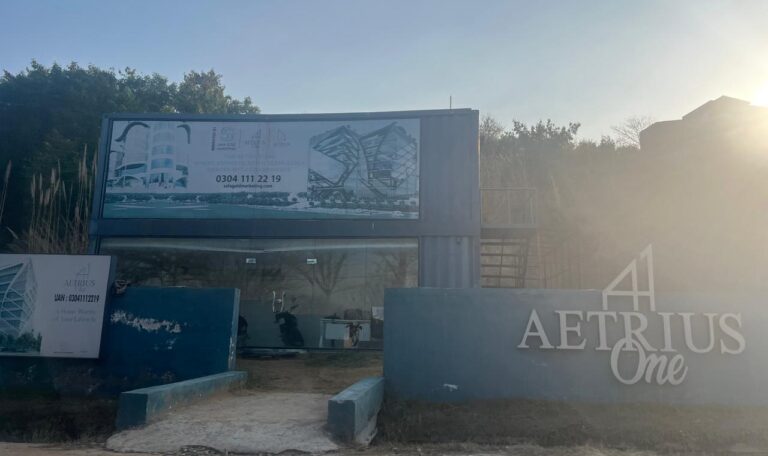
Garden Town Connection: Garden City has seen multiple projects launch together—Golf Floras, Khayal, Golf Vista, Aeterius, ZEM, and Golf Residency. All need the same SC/RC fixers, tile setters, plumbers, and electricians. Labor cannot be everywhere at once.
📊 The Global Delay Factors: A Side-by-Side Comparison
| Delay Factor | Canada | UK | USA | Pakistan (Garden City Bahria Town) |
|---|---|---|---|---|
| Regulatory Approvals | Committee of Adjustment can add months (R) | Planning delays suppressing workloads (R) | Zoning restrictions restrict supply (R) | CDA, RDA, Bahria approvals—multiple layers (R) |
| Contractor Stability | Stable but costly | Construction highest insolvency sector (R) | Regional variations; material cost pressure | High vulnerability to payment delays |
| Skilled Labor | Shortages in major cities | Labour shortages pressuring margins (R) | Need 500,000 new workers; 80% can’t find qualified talent (R) | Critical shortage of specialized workers |
| Material Costs | Rising globally | Imported MEP components costly (R) | Tariffs on building materials (R) | Steel, cement price volatility |
| Weather Delays | Winter construction starts extend timelines (R) | Seasonal slowdowns | Hurricane/flood risks | Monsoon pauses; winter curing delays |
| Financing Costs | Rising interest rates | Interest rate uncertainty (R) | Highest rates in decades | Interest rate pressure on developers |
| Market Conditions | Cautious client behaviour | Weak order books (R) | Builder confidence below breakeven (R) | Multiple simultaneous Garden City launches |
🧠 What Global Research Teaches Us About Garden City Bahria Town
The HKA Crux Insight Report, analysing 2,002 projects across 107 countries, identified five “mega-disrupters” that each affected 40 to 50 per cent of projects worldwide :
| Global Rank | Mega-Disrupter | Global Impact | Relevance to Garden Town Bahria Town |
|---|---|---|---|
| 1 | Contract (conflicts over formation or terms) | Affected 43.2% of projects worldwide | Developer-contractor agreements critical |
| 2 | Behaviours (individual and team actions) | Affected 49.7% of projects worldwide | Monetary pressures drive unreasonable behaviours |
| 3 | Speed to build (design-centric cluster) | Affected 47.6% of projects worldwide | Rushing design leads to changes, delays |
| 4 | Skills (gaps in skillsets and experience) | Affected 49.7% of projects worldwide | Ageing workforce, lack of investment in human capital |
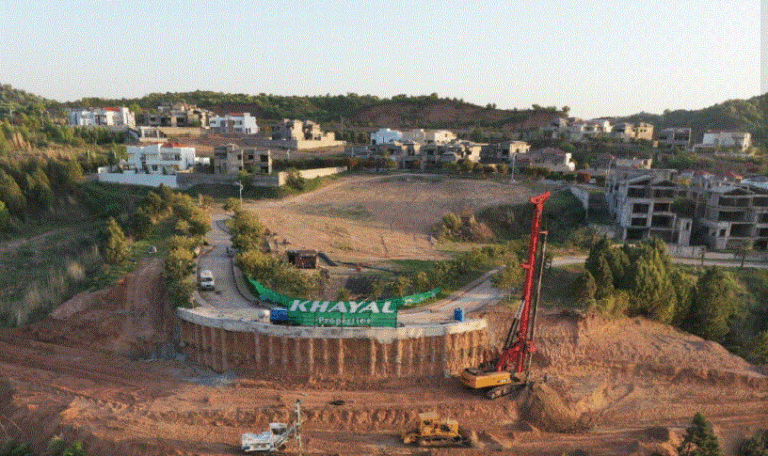
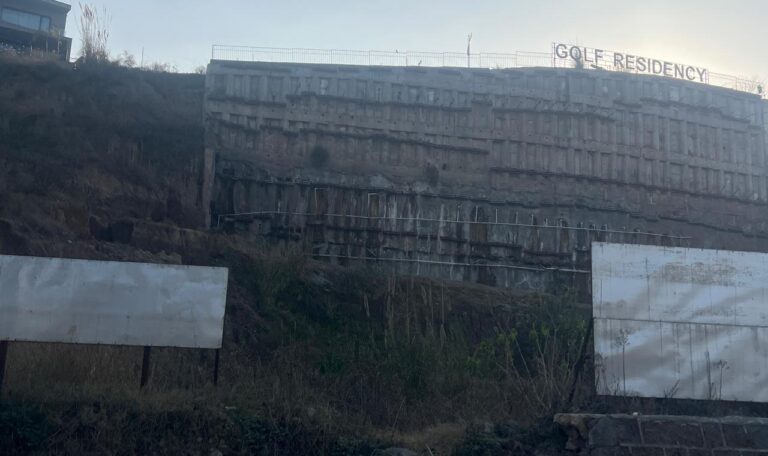
| 5 | Environment (weather, ground conditions) | Affected 41.3% of projects worldwide | Garden City’s terrain required retaining walls |
The Insight: Pakistan is not an outlier. We face the same challenges as developed nations—plus our own unique complexities.
📈 The Progress Paradox: Why Some Projects Move Faster
According to the Engineering News-Record’s 4Q Cost Report, “Uncertainty remains high, and is accelerating. Labor shortages, supply chain issues and political instability continue to affect projects. Many organizations are delaying or rethinking plans. The work is there, but risks are slowing progress” .
Given all these global challenges, why do some projects progress while others stall?
The answer lies in four critical factors drawn from international best practices:
1. Financial Structure
Projects with significant developer equity and institutional financing weather delays better than those dependent entirely on buyer installments. The Crux report confirms that financial issues with owners rank as the #1 cause of delays globally .
2. Phased Approvals
As the Toronto building guide emphasizes, identifying zoning issues early and submitting complete documentation significantly reduces review times .
3. Supply Chain Management
Projects that pre-order materials and lock in prices survive volatility. The ENR report notes that cost escalations are expected between 2% and 6% in 2026 across most countries, but this varies significantly by sector and region .
4. Realistic Pacing
The Crux report’s fundamental lesson: “Go slow to go fast.” Programmes that prioritise speeding the build are likely to be overtaken by disruptive and costly events .
📊 Phase 7 Project Progress: The Global Context Applied
| Project | Current Stage | Financial Structure | Approval Status | Labor Access | Risk Rating |
|---|---|---|---|---|---|
| Golf Residency | Retaining Wall Complete / Raft IP | ✅ Strong oversight | ✅ Clear approvals visible | ✅ Active site workforce | 🟢 Lowest Risk |
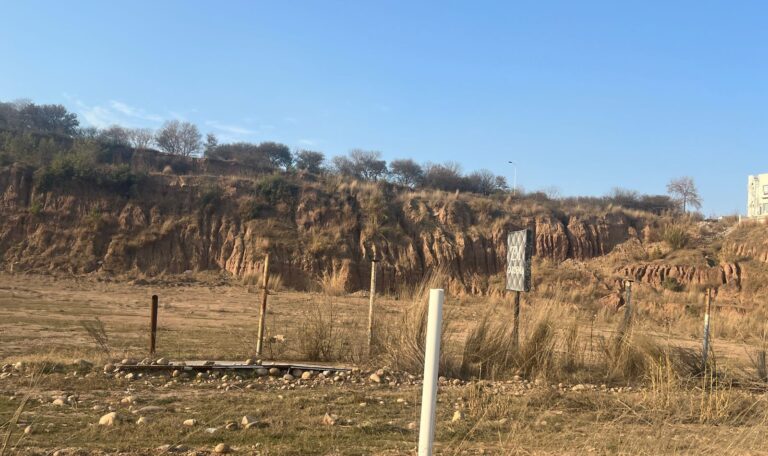
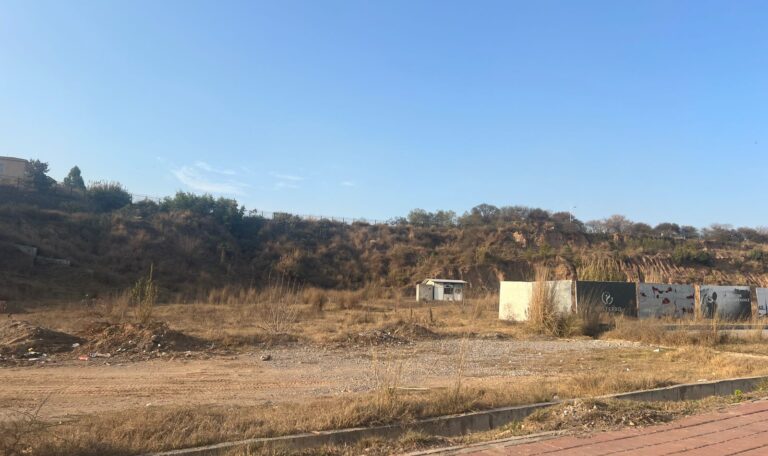
| Golf Floras | Land Leveling / Marketing | ⚠️ Developer dependent | ⚠️ In process | ⚠️ Not yet mobilized | 🟡 Medium Risk |
| Golf Floras II | Early Stages / Marketing | ⚠️ Developer dependent | ⚠️ In process | ⚠️ Not yet mobilized | 🟡 Medium Risk |
| Khayal / IOXORA | Land Preparation / Marketing | ⚠️ Developer dependent | ⚠️ Unclear | ⚠️ Not yet mobilized | 🟡 Medium Risk |
| Golf Vista | Marketing Phase | 🔴 Unknown | 🔴 Unverified | 🔴 No visible activity | 🔴 High Risk |
| Aeterius One | Marketing Phase | 🔴 Unknown | 🔴 Unverified | 🔴 No visible activity | 🔴 High Risk |
| Zem Gardenia | Marketing Phase | 🔴 Unknown | 🔴 Unverified | 🔴 No visible activity | 🔴 High Risk |
🏗️ The Golf Residency Advantage: Built on Global Best Practices
While global delays are inevitable, their impact depends entirely on developer response. Here is how Golf Residency applies lessons from around the world:
🇨🇦 Lesson from Canada: Secure Approvals Before Promising
Global Lesson: Toronto’s approval processes teach that timelines must include regulatory buffers. The City of Toronto’s digital permit system requires complete, accurate submissions to avoid back-and-forth that delays approval .
Golf Residency Application: All major approvals secured before vertical construction. Retaining wall completed—the most approval-intensive phase—is DONE.
🇬🇧 Lesson from UK: Protect Your Supply Chain
Global Lesson: With construction accounting for 18% of UK insolvencies and 297 firms failing in a single month , contractor financial health is paramount.
Golf Residency Application: Transparent payment practices ensure contractors are paid on time. No cascading failures.
🇺🇸 Lesson from USA: Lock in Skilled Labor
Global Lesson: With nearly 500,000 workers needed and 80% of firms struggling to find qualified talent , workforce continuity is a competitive advantage.
Golf Residency Application: Workforce actively on site. Skilled trades secured. Progress visible daily.
🧭 What This Means for You: A Global Investor’s Checklist
| Question | Why Ask | Where to Verify |
|---|---|---|
| Has the developer secured all major approvals? | Avoids “approval cliff” delays | Visit site; ask for NOC copies |
| Is there active workforce daily? | Labor shortage not affecting this site | Site visit—count workers |
| Are material stockpiles visible? | Supply chain is functioning | Site visit—look for steel, cement |
| Has the retaining wall/foundation been completed? | Most delay-prone phase is past | Golf Residency: ✅ Done |
| Is the developer financially transparent? | Avoids contractor payment delays | Request financial structure overview |
🌟 The Bottom Line: Global Problems Require Local Solutions
Construction delays are universal. From Toronto to London to New York, buyers wait longer than promised.
The HKA Crux report confirms that time overruns add almost 16 months or two-thirds to a typical schedule globally . The Middle East sees even higher delays, with claimed extensions of time averaging 80.9 per cent of planned duration .
But here is what separates successful projects from stalled ones:
| Successful Projects | Stalled Projects |
|---|---|
| Secure approvals first | Promise first, approve later |
| Maintain financial buffers | Spend every installment as it comes |
| Build real workforce capacity | Compete for scarce labor at peak |
| Communicate transparently | Go silent when delayed |
| Deliver visible progress | Deliver only marketing |
Golf Residency is building the successful project way.
Yes, we have faced delays—just like every major project in Garden City, just like projects in developed nations facing complex approvals, labor shortages, and contractor challenges.
But we have also secured our foundation, locked in our workforce, and maintained transparent communication.
The retaining wall is complete. The raft foundation is in progress. Vertical construction is imminent.
